What Is Shou Sugi Ban? The Complete Guide to Yakisugi
Discover the ancient Japanese art of charring timber — its origins, how it works, why it lasts, and how architects are using it in modern buildings today.
What Is Shou Sugi Ban? The Complete Guide to Yakisugi
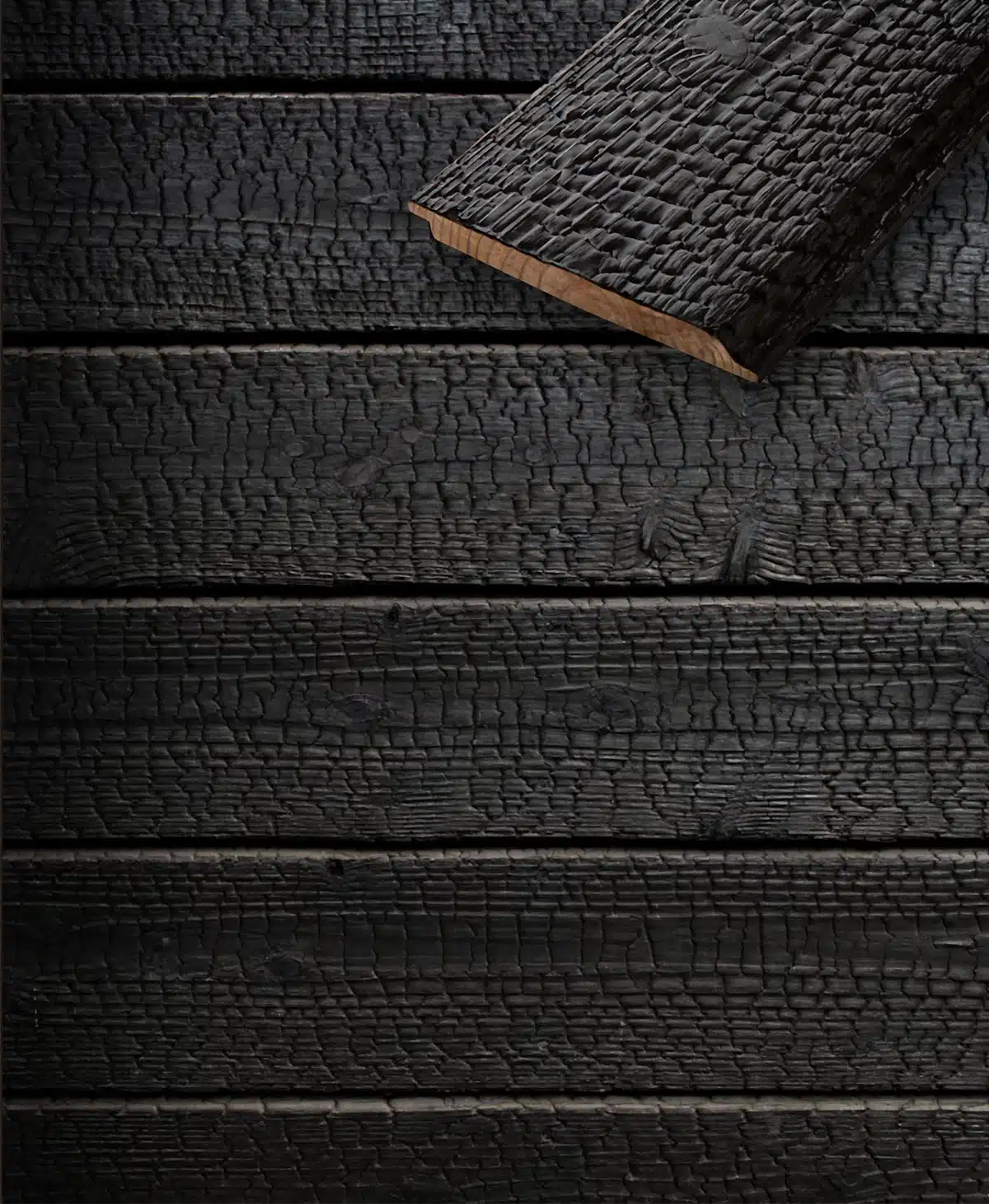
There is something quietly extraordinary about a building clad in charred black timber. It is at once ancient and modern, raw and refined. The surface tells a story of fire — and yet it endures.
This is shou sugi ban. Or, more accurately, yakisugi (焼杉) — the Japanese practice of charring timber to preserve and beautify it. In recent years it has moved from the rural villages of Japan to the facades of award-winning architecture across Europe, North America, and beyond.
This guide covers everything you need to know: where it comes from, how it works, why it lasts, and how to use it in contemporary projects.
The Origins of Yakisugi
The technique originates in 18th-century Japan, most likely in the Kyushu region. Japanese cedar (sugi) was the timber of choice — abundant, lightweight, and responsive to fire. Farmers and craftspeople discovered that charring the surface of cedar boards made them dramatically more resistant to rot, insects, moisture, and fire itself.
The name breaks down simply: yaku (焼く) means to burn or char; sugi (杉) is Japanese cedar. Western audiences came to know it as shou sugi ban — a phonetic rendering that has stuck, even when the timber used is not cedar at all.
For centuries, yakisugi was a practical solution to a practical problem. Charred boards were used to clad the lower sections of farmhouses, outbuildings, and storage structures — the areas most exposed to ground moisture and pests. The technique required no chemical treatment, no imported materials. Just fire, timber, and skill.
How Shou Sugi Ban Is Made
The traditional method involves three stages: char, clean, and finish.
1. Charring
Three boards are bound together to form a triangular chimney. A fire is lit inside — fed by paper or offcuts — and the boards are stood upright, allowing the flame to draw upward and char the inner faces evenly. The depth of char is controlled by the duration of burning.
At Senmonka, we use both traditional open-flame methods and controlled kiln charring, depending on the finish required. Each approach produces a different surface character.
2. Cleaning
Once cooled, the charred surface is brushed. The degree of brushing determines the final texture:
- Light brush — removes loose carbon while preserving the alligator-skin texture of deep char
- Medium brush — reveals the grain beneath, producing a silver-black surface
- Heavy brush — removes most of the char layer, leaving a lightly smoked, grain-forward finish
3. Finishing
Traditionally, yakisugi was left unfinished — the carbon layer itself provides protection. For contemporary applications, we apply natural oils to stabilise the surface, deepen the colour, and provide additional weather resistance. The choice of oil affects the final sheen, from completely matte to a subtle lustre.
Why Charred Timber Lasts
The science behind yakisugi is straightforward. Charring transforms the outer layer of the timber into carbon — a material that is:
Hydrophobic. Carbon does not absorb water. This dramatically reduces the moisture cycling that causes timber to swell, crack, and decay over time.
Resistant to insects and fungi. The organisms that cause timber decay cannot metabolise carbon. Charred timber is inhospitable to the beetles, termites, and fungi that attack untreated wood.
Fire-resistant. Counter-intuitively, charred timber performs well in fire. The carbon layer acts as an insulating char that slows the progression of flame into the structural timber beneath — a principle well understood in structural fire engineering.
Dimensionally stable. Reduced moisture absorption means less movement. Charred cladding boards are less prone to the warping and cupping that affects untreated timber in exposed conditions.
Independent testing has shown that properly charred and finished yakisugi can achieve a service life of 80 years or more with minimal maintenance — significantly outperforming most painted or stained timber cladding systems.
The Aesthetic Range of Yakisugi
One of the most compelling aspects of shou sugi ban is its visual range. The same fundamental process — charring timber — produces surfaces that look entirely different depending on the species, the depth of char, and the degree of brushing.
Deep Char (Alligator / Gator)
The most dramatic finish. Heavy charring produces a deeply cracked, three-dimensional surface that resembles reptile skin. The colour is an intense, velvety black. This finish is most associated with the traditional yakisugi aesthetic and works powerfully on bold architectural forms.
Medium Char (Brushed)
A middle ground. The surface is brushed to reveal the grain beneath the carbon layer, producing a silver-grey-black palette with visible wood texture. This finish reads differently in different lights — almost silver in bright sun, deeply black in shade.
Light Char (Smoked)
The subtlest finish. The timber is lightly charred and heavily brushed, leaving a surface that reads primarily as wood — but with a depth and warmth that untreated timber cannot match. The grain is prominent; the colour ranges from warm brown to cool grey depending on species.
Colour Finishes
Beyond the natural range of char, it is possible to introduce colour through the application of pigmented oils. At Senmonka, our product range includes finishes such as Cold Gray, Red Sky, and Very Berry — each building on the charred base to produce surfaces that are entirely distinctive.
Shou Sugi Ban in Contemporary Architecture
Yakisugi has experienced a significant resurgence in contemporary architecture over the past two decades. Several factors have driven this:
Sustainability. Charred timber requires no synthetic chemicals for preservation. It is a natural process applied to a renewable material. For architects and clients seeking low-impact material specifications, yakisugi is an increasingly attractive option.
Longevity. In an era of increasing focus on whole-life costs and building performance, a cladding system with an 80-year service life and minimal maintenance requirements is genuinely compelling.
Aesthetic distinctiveness. The visual character of charred timber is unlike any other material. In a landscape of render, brick, and composite cladding, a yakisugi-clad building is immediately distinctive.
Versatility. Shou sugi ban works at every scale — from a small garden studio to a large residential development. It suits contemporary minimalism, rural vernacular, and everything in between.
Notable recent projects using yakisugi include residential schemes in Scandinavia and the UK, cultural buildings in Japan and the United States, and a growing number of hospitality projects where the material's warmth and character are particularly valued.
Specifying Shou Sugi Ban: What to Consider
If you are considering yakisugi for a project, there are several factors worth understanding before you specify.
Timber Species
Traditional yakisugi uses Japanese cedar (Cryptomeria japonica). In the UK and Europe, the most commonly used species are:
- Larch — the most popular choice for exterior cladding. Dense, resinous, and responsive to charring.
- Oak — produces a particularly rich, complex surface. Slower to char, more expensive, but exceptional in quality.
- Cedar — the traditional choice. Lightweight and stable, with a fine grain.
- Pine — an accessible option with a distinctive resinous character.
Each species chars differently and produces a different surface character. We recommend requesting sample boards before specifying.
Profile and Installation
Yakisugi boards can be supplied in a range of profiles — featheredge, square-edge, shiplap, and open-joint. The choice of profile affects both the visual character and the performance of the cladding system. Open-joint systems allow the wall to breathe; closed systems provide a more continuous surface.
Maintenance
Properly finished yakisugi requires very little maintenance. We recommend a light application of oil every five to ten years, depending on exposure. The surface will weather naturally over time — typically silvering slightly — which many clients find adds to the character of the material.
Working with Senmonka
At Senmonka, we produce yakisugi from our workshop in North Yorkshire. Every board is charred, brushed, and finished by hand. We supply architects, contractors, and private clients across the UK.
We offer free sample boards for architects and designers on live projects, and we're happy to discuss specification requirements, lead times, and bespoke finishes.
If you're considering shou sugi ban for a project, get in touch — we'd be glad to help.
Senmonka is a specialist producer of yakisugi charred timber, based in North Yorkshire. We supply exterior cladding, flooring, and bespoke commissions to architects, contractors, and homeowners across the UK.
Explore Topics
Written by
Senmonka
Content creator and writer sharing insights and stories.

